What Makes a Purebred Puppy Different
Purebred puppies are dogs whose ancestry traces back through generations within a single breed, each generation bred according to documented standards. The practical result for you as a future owner is predictability. A Golden Retriever raised by a responsible breeder will typically grow to a certain size range, carry a recognizable coat type, and display the breed’s well-known friendly, eager-to-please character. A Cavalier King Charles Spaniel will tend to be gentle and affectionate, comfortable with children and other pets. A Siberian Husky will be athletic and high-energy, happiest with regular vigorous exercise and mental engagement.
This does not mean every puppy within a breed is identical — individual personalities always vary, and how you raise and train your dog matters just as much as genetics. But breed-typical traits give you a real foundation to work from when you’re choosing a companion who needs to fit your family’s lifestyle, activity level, and living space.
At Perfect Little Puppies in Pearland, we source our purebred puppies exclusively from vetted, licensed breeders committed to responsible practices. Every puppy in our store receives a veterinary check before you take them home, and we’re transparent about their background, vaccination history, and care.
The Purebred Breeds We Carry in Houston
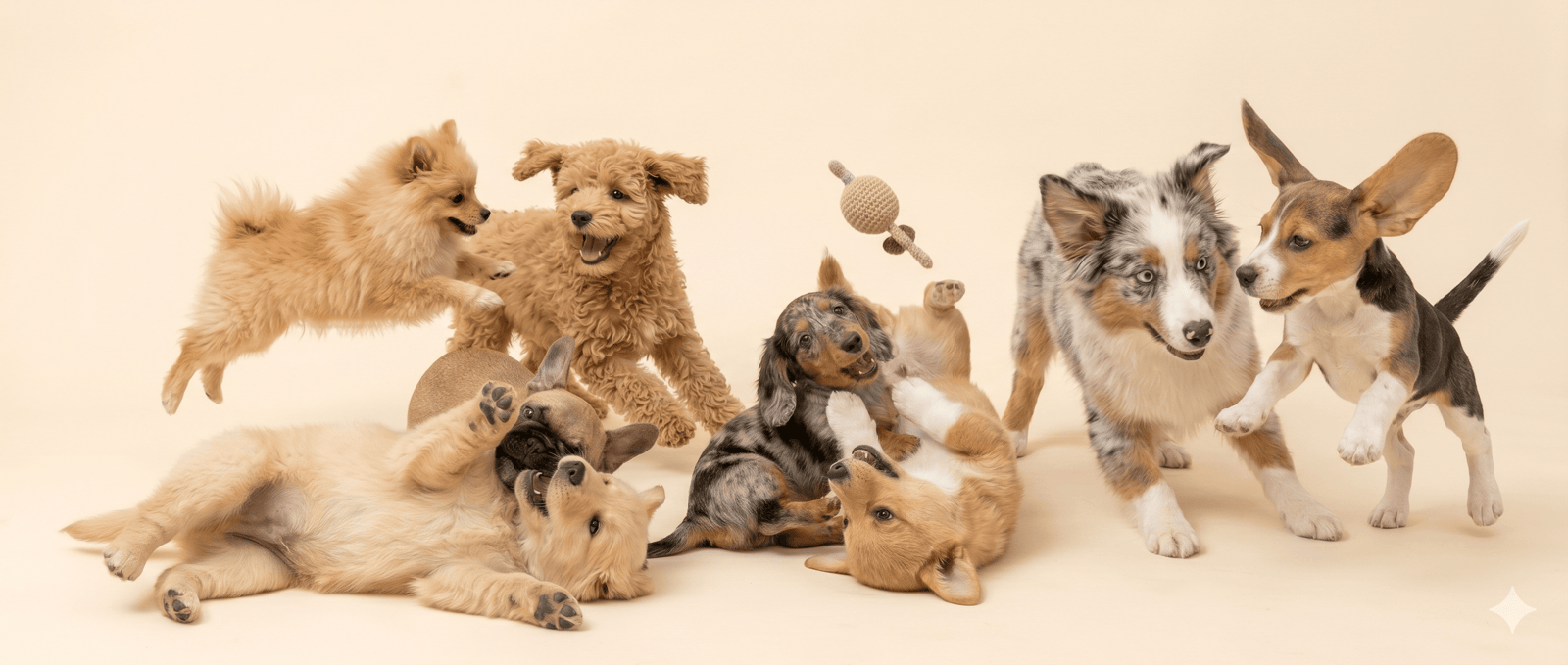
Our purebred collection spans a wide range of sizes, temperaments, and coat types — from pocket-sized companions to sturdy family dogs. Here is a look at some of the breeds you may find:
Small and Toy Breeds Some of the most popular purebreds for Houston families in smaller homes and apartments. The Bichon Frise and Maltese are playful, low-shedding companions well suited to apartment living. The Shih Tzu is affectionate and adaptable, historically bred as a companion dog for royalty. The Pomeranian is spirited and curious with a bold personality packed into a small frame. The Yorkshire Terrier is energetic and confident, a breed that consistently ranks among the most popular in the country. The Chihuahua is loyal and alert, forming deep bonds with their families. The Toy Poodle is one of the most intelligent dog breeds and sheds minimally, making it a strong choice for allergy-sensitive households.
Medium Breeds The Beagle is a curious, sociable hound with a famously friendly disposition — a classic family dog. The French Bulldog is easygoing and adaptable, thriving in urban environments with minimal exercise demands. The Cavalier King Charles Spaniel is gentle, calm, and wonderful with children. The Cocker Spaniel is sweet-natured and eager to please. The Pembroke Welsh Corgi is intelligent and surprisingly athletic for its size, originally bred for herding. The Shiba Inu is alert, clean, and independent — a breed with devoted fans across the country. The Boston Terrier is cheerful and adaptable, at home in both quiet households and busy families.
Larger Purebreds The Golden Retriever and Labrador Retriever remain two of the most beloved family dogs in America for good reason — they are patient, trainable, and gentle with children. The German Shepherd is highly intelligent and loyal, excelling in both companionship and working roles. The Bernese Mountain Dog is a calm, affectionate giant that is surprisingly adaptable to suburban life when given regular exercise. The Boxer is playful and energetic, known for its loyalty and natural protectiveness with family. The Australian Shepherd is one of the most intelligent and athletically gifted breeds, thriving with active owners who can give it both physical exercise and mental challenges.
We also regularly carry Dachshunds, Pugs, Dalmatians, English Bulldogs, Samoyeds, Rottweilers, Doberman Pinschers, Poodles in standard, moyen, and miniature sizes, and many more. Browse our full available puppies page to see who’s in store right now.
Choosing the Right Purebred for Your Lifestyle
The most important step when choosing a purebred puppy is honest self-assessment. Here are the key questions to walk through before you visit:
How active is your household? A Siberian Husky, Australian Shepherd, or German Shorthaired Pointer will be genuinely unhappy without daily vigorous exercise and mental stimulation. These are working breeds at heart. A Bichon Frise, Havanese, or Coton de Tulear, by contrast, are happy with moderate play and walks — better fits for quieter routines or limited outdoor time.
What size dog fits your space? Larger breeds like the Bernese Mountain Dog or Golden Retriever can certainly live in suburban Houston homes, but they need room to stretch out and regular outdoor time. Toy and small breeds like the Chihuahua, Papillon, or Pekingese are naturally suited to smaller spaces.
How much grooming are you willing to commit to? Long-coated breeds like the Shih Tzu, Maltese, and Lhasa Apso need daily brushing and regular professional grooming to stay comfortable. Short-coated breeds like the Beagle or Boxer need much less coat maintenance. Poodle varieties, from the Toy Poodle to the standard Poodle, shed minimally but do require regular trimming.
Do you have young children or other pets? Breeds like the Golden Retriever, Labrador Retriever, Cavalier King Charles Spaniel, and Beagle are typically gentle and patient with children. Terrier breeds and herding breeds tend to be more assertive and may need additional socialization in multi-pet homes.
Our team at the Pearland store is happy to walk through these questions with you in person and help you find a breed that genuinely fits your life — not just the one that looks adorable in photos.
Health, Breeders, and What to Look For
Responsible breeders invest significantly in the health of their breeding dogs. Reputable breeders conduct health screenings on their parent dogs — things like OFA-certified hip and elbow evaluations, eye exams through the Canine Eye Registration Foundation (CERF), and genetic tests for breed-specific conditions. This transparency improves the odds of healthier puppies, though it is not a lifetime guarantee for any individual dog.
Organizations like the Orthopedic Foundation for Animals (OFA) and the Canine Health Information Center (CHIC) maintain searchable public databases where you can review health testing results on breeding dogs. Breed clubs affiliated with the American Kennel Club often publish breed-specific health recommendations that responsible breeders follow.
Research from the UC Davis School of Veterinary Medicine and more recently from Texas A&M University has examined health outcomes across purebred and mixed-breed populations. The findings consistently show that when dogs come from responsible sources with documented health screening, breed type alone is less significant than the practices of the breeder or source. What matters most is choosing a puppy whose parents have been health-tested and whose early environment prioritized socialization and veterinary care — exactly the standard we hold our breeders to at Perfect Little Puppies.
All of our puppies receive a veterinary examination before they join your family. An optional written health warranty is available in-store for additional peace of mind during your puppy’s critical early years. Ask our team about the details when you visit.
Socialization and the Early Weeks
The weeks between a puppy’s birth and their arrival in your home lay the foundation for their adult temperament. Responsible breeders introduce puppies to a variety of sounds, surfaces, gentle handling, and human contact during this window — a process sometimes called early neurological stimulation and environmental enrichment. Puppies exposed to positive, varied experiences during these early weeks typically grow into more confident, adaptable adult dogs.
When your purebred puppy comes home, your job is to continue this work. Introduce new experiences gradually and always with positive reinforcement. Puppy socialization classes, available throughout the greater Houston area, are one of the best investments you can make in the first few months. They expose your puppy to other dogs and people in a controlled, structured environment and give you professional guidance on building good habits early.
Different breeds also have breed-specific tendencies that are worth addressing in early training. A Terrier should learn early on that small animals are not prey. A herding breed like a Shetland Sheepdog may naturally try to “herd” children or other pets — gentle redirection during puppyhood shapes this instinct into something manageable. A scent hound like the Beagle will follow its nose with tremendous focus, so reliable recall training is essential.
Enjoying Houston With Your Purebred Puppy
Greater Houston is genuinely one of the better cities for dog owners. Once your purebred puppy has completed their vaccinations and your vet clears them for public socialization, the area offers excellent options for outdoor time and exercise.
In Pearland, Southdown Dog Park at 2150 Countryplace Parkway and Independence Dog Park at 3449 Pearland Pkwy both feature fully fenced off-leash areas with separate sections for small and large dogs, agility equipment, water fountains, and waste stations. Both are well-maintained and popular with local dog owners.
Across Houston, McWilliams Dog Park at 1598 S MacGregor Way along Brays Bayou offers a two-acre, fully fenced off-leash space with interactive water features and a dog wash station — one of the nicest urban dog parks in the city. Johnny Steele Dog Park at 2929 Allen Pkwy in Buffalo Bayou Park has separate ponds for large and small dogs, shaded areas, and a dog washing station in a beautiful bayou-side setting.
Houston’s warm climate means your dog can be active outdoors for much of the year. Longer-coated breeds and breeds prone to overheating — like English Bulldogs and French Bulldogs — will appreciate early morning or evening outings during summer months.
Financing a Purebred Puppy
Purebred puppies sourced from ethical breeders reflect the genuine cost of health screening, quality nutrition, veterinary care, and responsible socialization. That investment is real — and we want it to be accessible. Puppy financing options are available so you can bring your perfect companion home without the pressure of a single large upfront payment. Ask our team at the store about current programs and what fits your situation.
Beyond the purchase, planning ahead for ongoing costs — quality food, routine veterinary visits, grooming, training classes, and pet insurance if you choose to carry it — sets you up for a smooth experience over the years your dog will be with you.
Frequently Asked Questions About Purebred Puppies
Are purebred puppies healthier or less healthy than mixed breeds?
Research from the UC Davis School of Veterinary Medicine and Texas A&M University has found that purebred and mixed-breed dogs have broadly similar overall health outcomes when both come from responsible sources. Purebreds may carry a higher risk for specific breed-associated conditions — hip dysplasia in larger breeds, cardiac issues in certain spaniels, and so on — but responsible breeders screen for these conditions in their breeding dogs, which lowers (though does not eliminate) the risk in offspring. The most meaningful factor is not breed type but whether the source conducted thorough health testing and provided appropriate early care.
What does AKC registration mean, and why does it matter?
AKC (American Kennel Club) registration documents that a dog is purebred and records its lineage. It is a paper trail, not a quality certification. Registration confirms ancestry; it does not verify the health, temperament, or ethical practices of the breeder. A registered puppy from a negligent breeder may have more documented lineage than a well-bred puppy from a breeder who chose a different registry. Always ask about health testing, socialization practices, and veterinary care in addition to registration papers.
What should I ask before choosing a purebred puppy?
Ask about health testing performed on the parent dogs — specifically what screening was done and through which organization. Request vaccination records and a health history for the puppy. Ask about the puppy’s socialization routine: what environments, sounds, and people were they exposed to before this age? Inquire about what comes with the puppy in terms of an optional health warranty or post-purchase support. Ask which puppy in the litter the staff would recommend for your household’s energy level and lifestyle. Good sources welcome these questions and answer them in detail.
How do I choose the right purebred breed for my family?
Start by mapping your household’s actual lifestyle: how active you are, how much space you have, how much time you can give to grooming and training, whether you have young children or other pets, and your tolerance for shedding. Then research breeds that fit those parameters. If possible, meet several breeds in person before deciding — meeting a Boxer and a Shih Tzu side by side gives you information that no amount of online reading can fully replace. Our team at the Pearland store can help you compare breeds based on what matters to your family.
What is the right age to bring a purebred puppy home?
Most responsible breeders and veterinary behaviorists recommend 8 to 12 weeks as the ideal window. By this age, puppies have been weaned, have completed early socialization with their mother and littermates, and are developmentally ready to bond with a new human family. Bringing a puppy home before 8 weeks can disrupt important early social learning; waiting past 12 weeks is fine for many breeds, though the socialization window is narrowing.
Is a health warranty available at Perfect Little Puppies?
Yes — an optional written health warranty is available in-store at Perfect Little Puppies. Ask a puppy counselor about terms, eligibility, and pricing when you visit. Our team is transparent about what the warranty covers and how to use it if needed.
Are any of the purebred breeds at Perfect Little Puppies considered low-shedding?
Several breeds in our purebred collection are known for minimal shedding. Toy Poodles, Mini Poodles, Moyen Poodles, and standard Poodles shed very little and are a popular choice for families with allergy sensitivities. The Bichon Frise, Maltese, Coton de Tulear, Havanese, Yorkshire Terrier, and Soft Coated Wheaten Terrier are also lower-shedding options. Keep in mind that no dog breed is entirely allergen-free — dander and saliva proteins affect individuals differently, so spending time with a breed before committing is always a good idea.
Ready to meet your perfect purebred companion? Visit our Pearland store to see our current available puppies, interact with them in person, and talk with our knowledgeable team. We match families with puppies thoughtfully — not just by breed on paper, but by real temperament and fit. Not sure where to start? Contact our team and we’ll help you narrow it down. There’s a perfect puppy waiting for your family — come find them.