Large Breed Puppies for Sale in Houston
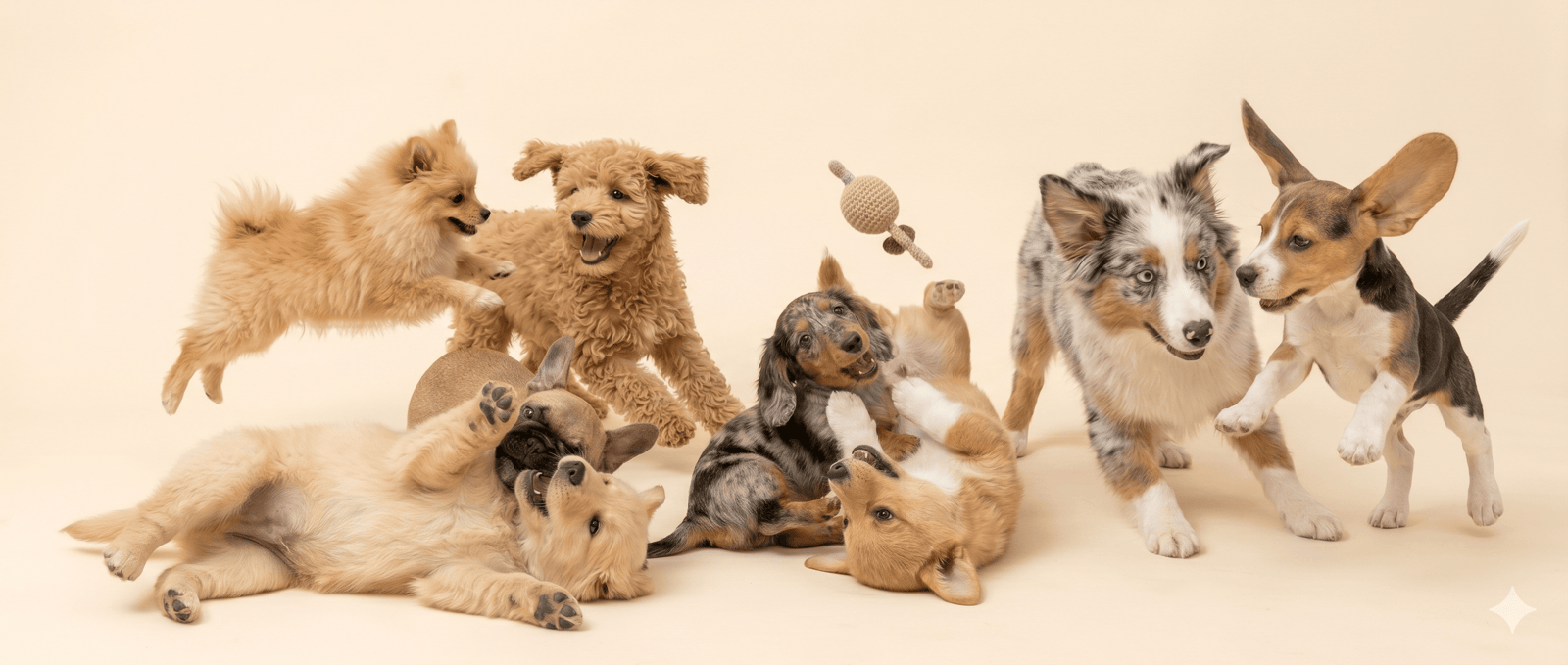
When you’re ready to welcome a large breed puppy into your home, you’re choosing a companion who will grow into a loyal, affectionate member of the family. At Perfect Little Puppies in Pearland, we specialize in responsibly bred, vet-checked large breed puppies sourced from vetted, licensed breeders who prioritize health, temperament, and early socialization. Whether you’re drawn to the intelligence of a German Shepherd, the friendly warmth of a Golden Retriever, or the low-shedding appeal of a Goldendoodle or Bernedoodle, our large breed puppies are ready to meet you in person at our Pearland store.
Meet the Large Breed Puppies in Our Collection
Our large breed category includes a carefully chosen group of breeds and mixes — each one sourced from ethical, screened breeders. Here’s a look at who you might meet when you visit:
- Akita — A dignified, loyal breed known for courage and quiet confidence; best suited to experienced dog owners.
- Aussiepoo — An energetic, intelligent mix of Australian Shepherd and Poodle with a low-to-moderate shedding coat.
- Australian Shepherd — A highly trainable, active herding breed that thrives with regular exercise and mental stimulation.
- Bernedoodle — A popular cross of Bernese Mountain Dog and Poodle; playful as a pup and more laid-back as an adult.
- Bernese Mountain Dog — A gentle giant with a striking tri-color coat; affectionate with families and good with children.
- Boxer — A fun-loving, energetic breed with a goofy streak and genuine devotion to their family.
- Dalmatian — A distinctive, high-energy breed with a spotted coat and an athletic build; enjoys an active lifestyle.
- English Bulldog — A calm, affectionate breed with a sturdy build; well-suited to families who prefer a lower-activity companion.
- German Shepherd — Widely regarded as one of the most intelligent and versatile breeds; excels in training, protection, and companionship.
- Golden Retriever — A naturally social, cheerful breed that typically gets along well with children, other dogs, and visitors.
- Goldendoodle — A Golden Retriever and Poodle cross that combines a friendly personality with a low-shedding coat.
- Great Dane — The gentle giant of the dog world; surprisingly calm indoors and deeply devoted to their family.
- Labradoodle — A Labrador and Poodle mix that brings together an easy-going temperament with reduced shedding.
- Labrador Retriever — Consistently one of the most popular family dogs; smart, trainable, and genuinely people-oriented.
- Rottweiler — A confident, protective breed with a loving side; benefits greatly from consistent training and early socialization.
- Siberian Husky — A striking, high-energy breed with a friendly, mischievous personality; needs plenty of exercise.
- Soft Coated Wheaten Terrier — A spirited, silky-coated terrier that is playful and affectionate with a lower-shedding coat.
- Whoodle — A Soft Coated Wheaten Terrier and Poodle mix; smart, friendly, and typically low-shedding.
Browse our full selection of puppies for sale to see who’s currently available.
What Makes Large Breed Puppies Different
Large breed puppies — broadly defined as those that will weigh 50 pounds or more as adults — have care requirements that differ meaningfully from smaller breeds. Their growth is slower and more complex, their nutritional needs are more specific, and their joints need extra consideration during the first year of life. Understanding these differences before you bring your puppy home sets you both up for a long, healthy relationship.
These breeds tend to be confident, loyal, and family-oriented when raised with consistent training and socialization. German Shepherds are highly intelligent and eager to work; Labrador Retrievers are outgoing and adaptable; Bernedoodles are warm and playful. Many of the Doodle mixes in our collection — Goldendoodles, Bernedoodles, Aussiepoos, Labradoodles, and Whoodles — combine the intelligence and low-shedding qualities of Poodles with the friendly temperament of larger parent breeds, making them appealing to families with mild allergy sensitivities.
Nutrition and Growth for Large Breed Puppies
Proper nutrition during the first 12 to 18 months is foundational for large breed puppies. Unlike their smaller cousins, large breed puppies need specially formulated diets with controlled levels of calcium, phosphorus, and overall caloric density. Well-intentioned overfeeding can actually increase the risk of developmental orthopedic conditions by pushing growth to happen faster than bones and joints can handle.
Choose a commercial diet specifically labeled for large-breed puppy growth. These formulas are designed to moderate the growth rate, giving bones and joints time to develop properly. Avoid adding extra calcium or phosphorus supplements on top of a complete diet — the balance is already built in. Measure meals rather than free-feeding; research has found that puppies fed measured portions have lower rates of hip dysplasia than those allowed to eat freely. Your veterinarian is the best guide for the right daily portions based on your puppy’s age, breed, and current weight.
Joint Health: What You Can Do
Hip and elbow dysplasia are among the most discussed health concerns for large breeds — German Shepherds, Labradors, Golden Retrievers, and Bernedoodles are among the breeds with higher genetic predisposition. These conditions develop when a joint doesn’t fit together the way it should, leading to instability and, over time, arthritis. Genetics play a major role, but environmental factors — diet, exercise, and growth rate — also influence whether a genetically susceptible puppy will actually develop symptoms.
At Perfect Little Puppies, our puppies receive a veterinary health check before going home, and we work exclusively with breeders who screen their breeding dogs for heritable conditions. Beyond that, you can support your puppy’s joint development by feeding an appropriate large-breed puppy diet, keeping them at a healthy body weight, and choosing low-impact exercise during the first year. Leash walks and swimming are excellent options; avoid repetitive jumping, rough play on hard floors, or extended running on pavement until growth plates have closed — typically between 12 and 18 months for large breeds. Talk to your vet about whether a joint supplement such as glucosamine may be appropriate for your specific puppy.
Exercise for Growing Large Breed Puppies
Large breed puppies are naturally active and playful, but they don’t need — and shouldn’t get — excessive exercise while their bones are still forming. A widely used guideline is five minutes of structured exercise per month of age, up to twice per day. A four-month-old puppy is well-served by two 20-minute sessions of calm leash walking or play; a six-month-old can gradually handle a bit more. As your puppy grows past the one-year mark, you can increase duration and intensity.
Good options for young large breed puppies include structured leash walks on soft ground, swimming, short training sessions, and supervised play on grass. Mental exercise matters just as much as physical activity — puzzle feeders, scent games, and obedience training sessions are effective at tiring a sharp puppy’s mind without stressing developing joints. The Houston area offers a variety of dog-friendly parks and trails that are well-suited to puppy outings; Pearland’s local dog parks provide space and socialization opportunities as your puppy builds confidence around other dogs.
Thriving in Houston’s Climate
The Houston area is warm and welcoming year-round, but the heat and humidity from late spring through early fall require some planning for large breed puppy owners. Dogs cool themselves primarily through panting, and humid air makes that process less efficient — meaning heat exhaustion can develop more quickly than owners expect.
Plan outdoor activity during the cooler parts of the day: early morning before 10 a.m. or evening after the sun has begun to drop. Avoid strenuous play when temperatures and humidity are both high. Always provide access to fresh, cool water and shade. Never leave your puppy in a parked car, even briefly. Protect paws from hot pavement and asphalt — grass and shaded paths are preferable. Breeds with thicker double coats like German Shepherds, Bernese Mountain Dogs, Siberian Huskies, and Bernedoodles benefit from more frequent brushing in Houston’s climate to prevent matting and help air circulate against the skin. Professional grooming every four to eight weeks is a practical habit for most large breed owners here.
Training and Early Socialization
Large breed puppies have the size and strength to develop problematic habits if training is delayed. Beginning leash manners, basic commands, and consistent house rules from day one makes an enormous difference. Positive reinforcement — using treats, praise, and rewards to encourage wanted behaviors — works well across all large breeds and is especially important for building trust with stronger, more independent-minded breeds like Rottweilers and Akitas.
Enroll in a puppy kindergarten class as soon as your puppy has completed their initial vaccinations. These classes serve two purposes: structured training and critical socialization. The socialization window closes around 16 weeks of age, and puppies who experience a variety of people, sounds, environments, and other animals during this period tend to grow into more confident, well-adjusted adults. Introduce your puppy to different settings calmly and positively — outdoor patios, parks, busy sidewalks, different types of people — always at a pace that keeps your puppy relaxed.
Caring for Your Large Breed Puppy at Home
Setting up your home thoughtfully before your puppy arrives makes the transition smoother for everyone. A comfortable crate gives your puppy a secure retreat and supports housetraining. Puppy-proof the space by securing electrical cords, storing medications and toxic plants out of reach, and identifying chewable items that need to be moved. Large breed puppies grow fast — invest in appropriately sized food and water bowls, a sturdy leash and collar that can be adjusted as they grow, and a large-breed formulated puppy food.
Budget for the realities of large breed ownership: feeding costs are notably higher than for small breeds, grooming visits add up, and veterinary care for a larger dog is typically more expensive. We recommend puppy financing options for families who want flexibility in how they budget for bringing home their new puppy.
Health Care and Preventive Wellness
Schedule a veterinary visit within the first week of bringing your puppy home. Your vet will confirm the vaccination record from the health check your puppy received at our store, establish the appropriate ongoing vaccine schedule, and discuss preventive care for parasites — fleas, ticks, and heartworm prevention are all year-round considerations in Houston’s warm climate.
One health concern specific to large and deep-chested breeds — including Great Danes, Bernese Mountain Dogs, and some Doodle mixes — is bloat, also known as gastric dilatation-volvulus. This is a serious condition where the stomach fills with gas and can twist. Preventive steps include feeding two or three smaller meals rather than one large meal each day, and avoiding vigorous exercise immediately before or after eating. Ask your veterinarian whether your specific breed has elevated risk.
Regular wellness checks every six to eight weeks during the first year allow your vet to track growth, monitor joint development, and catch early signs of any concern. An optional written health warranty is available in-store at Perfect Little Puppies, giving you additional peace of mind as your puppy settles into your family.
Frequently Asked Questions About Large Breed Puppies
What large breed puppies are available at Perfect Little Puppies?
Our large breed collection includes Akitas, Australian Shepherds, Bernedoodles, Bernese Mountain Dogs, Boxers, Dalmatians, English Bulldogs, German Shepherds, Golden Retrievers, Goldendoodles, Great Danes, Labradoodles, Labrador Retrievers, Rottweilers, Siberian Huskies, Soft Coated Wheaten Terriers, Whoodles, and Aussiepoos. Availability changes regularly — visit our puppies for sale page or stop by our Pearland store to see who’s currently in.
How long does it take for a large breed puppy to reach full size?
Most large breed puppies reach their full adult size between 12 and 24 months, with very large breeds such as Great Danes sometimes taking up to 18 to 24 months. Growth plates — the soft cartilage at the ends of bones — typically close between 12 and 18 months for large breeds. Even if your puppy looks nearly full-grown at 8 or 10 months, they may still be filling out internally. Continue feeding a large-breed puppy formula until your veterinarian advises switching to an adult diet, generally after the 12-to-18-month mark.
Are financing options available for large breed puppies?
Yes. We offer financing options to help make bringing home your puppy more accessible. Our financing partnerships allow qualified buyers to spread the cost over manageable monthly payments. Visit our store or contact our team for details on current financing programs.
Can large breed puppies live comfortably in an apartment?
Yes, many large breed puppies adapt well to apartment living, provided they receive consistent daily exercise, mental stimulation, and plenty of time with their people. Plan for at least 30 to 60 minutes of structured outdoor activity each day. A fenced yard is convenient but not required if you’re committed to regular walks and play sessions. Breeds like English Bulldogs and Great Danes are often surprisingly calm indoors; high-drive breeds like Australian Shepherds and Siberian Huskies need more vigorous daily exercise regardless of home size.
What health issues are most common in large breed puppies?
The most frequently discussed conditions in large breeds include hip dysplasia, elbow dysplasia, and bloat (gastric dilatation-volvulus). Joint conditions have both genetic and environmental components — proper nutrition, appropriate exercise, and a happy body weight during puppyhood all play a role in reducing risk. Our puppies are vet-checked before purchase, and an optional written health warranty is available in-store. Watch for signs of joint discomfort such as limping, reluctance to climb stairs, or stiffness after rest, and consult your veterinarian promptly if you notice any changes.
What is the best age to bring a large breed puppy home?
The ideal age is typically 8 to 12 weeks. By this stage, puppies are fully weaned, have received their initial vaccinations, and are developmentally ready to bond with a new family. Bringing your puppy home during this window allows you to shape their habits, build trust, and provide socialization experiences during the most receptive period of their development.
Visit Perfect Little Puppies in Pearland
Choosing a large breed puppy is one of the most rewarding decisions a family can make — and we’re here to help you make it with confidence. At Perfect Little Puppies in Pearland, every puppy in our care comes from a vetted, licensed breeder, receives a veterinary health check, and is raised with early socialization as a priority. Our team is happy to answer your questions, help you think through which breed suits your lifestyle, and walk you through financing options that make the process more accessible. Contact us or stop by the store to meet your next best friend in person.