You Said Yes. Now What?
Whether you’re a first-time puppy parent or just need a refresher, the days leading up to bringing your new puppy home are a beautiful mix of excitement and mild panic. We get it — that’s exactly why we put together this new puppy checklist of what to buy, what to prep, and what to expect so you can spend less time stressing and more time soaking up those puppy snuggles.
The weeks before your new puppy arrives are your chance to set yourself — and your family — up for success. A little preparation goes a long way in making the transition smooth and safe. Let’s walk through everything you need to know.
Before They Come Home: The 48-Hour Puppy-Proofing Plan
Puppy-proofing isn’t optional — it’s essential safety. Puppies are curious, fast, and shockingly good at finding the one thing you forgot to move. Electrical cords, small objects, and toxic plants all pose real risks. Here’s a room-by-room rundown for your Houston home or apartment:
Living Room
- Bundle and hide electrical cords using cord covers or organizers — puppies are tempted to chew on anything that dangles
- Remove toxic houseplants (pothos, philodendron, cyclamen, and aloe are common culprits found in many homes)
- Set up a baby gate to create a safe zone while your pup adjusts to their new surroundings
- Clear the floor of small objects — in a puppy’s eyes, everything from hair ties to charging cables is a potential chew toy
Kitchen
- Install childproof locks on ground-level cabinets where cleaning supplies and foods are stored
- Secure the trash can inside a cabinet or use a locking trash can
- Keep food away from counter edges — small breeds can surprise you with their climbing ability
Bathroom
- Keep the toilet lid down at all times to prevent accidental drowning
- Store medications, vitamins, supplements, and beauty products out of reach on high shelves or in locked cabinets
- Add a non-slip mat so tiny paws don’t slide across tile or linoleum
- Keep all household chemicals and cleaners safely locked away
Bedroom
- Decide right now whether your puppy sleeps in your bed or their crate — and commit to it from night one for consistency
- Clear chewable items from floor level (shoes, socks, chargers, and clothing can all end up in a puppy’s mouth)
- Make space for a crate near you for the first few nights to ease the transition and help with nighttime bathroom breaks
For Apartment Dwellers in Houston: Double-check your building’s pet policy before bringing your puppy home. Look for any gaps in balcony railings that a small breed could squeeze through, and identify the closest green space for bathroom breaks. Small breeds need frequent outdoor access, so proximity matters.
Must-Have Puppy Supplies
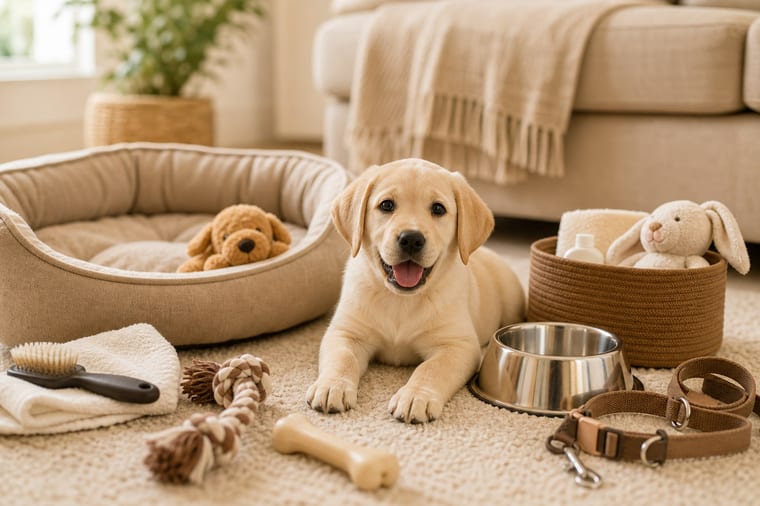
This is the real puppy shopping list Houston small-breed owners need — no fluff, just the essentials that make the first week manageable. You don’t have to buy everything on day one, but having these basics in place will smooth out that transition significantly.
Comfort & Sleep Essentials
- Crate — sized just right so your puppy can stand and turn around, but not so large they can use a corner as a bathroom
- Soft crate pad or puppy bed — something washable with a waterproof bottom to protect floors during accidents
- Cozy blanket — bring something with the breeder’s scent (or your scent once at home) to help your puppy settle those first nervous nights
Feeding Essentials
- Puppy food — ask your breeder or seller what they’ve been eating so you can continue the same brand or transition gradually (sudden diet changes cause digestive upset)
- Stainless steel food and water bowls — easier to sanitize than plastic and less likely to harbor bacteria
- Slow feeder — helps small breeds eat at a comfortable pace and aids digestion
Health & Hygiene
- Puppy shampoo — gentle, pH-balanced formula for sensitive skin
- Nail clippers or nail file — start getting your puppy used to paw handling early
- Toothbrush and puppy toothpaste — dental habits established in puppyhood pay dividends for life, especially in small breeds prone to dental issues
- Ear cleaning solution — a light wipe-down every few weeks keeps ears healthy and prevents infections
Play & Training Gear
- Collar or harness with ID tag — ID tags save lives; for small breeds, a harness is gentler on the neck than a collar alone
- Leash — a 4–6 foot standard leash for training walks and exploring
- Puppy-safe chew toys — redirect those teething teeth onto something appropriate; rotate toys to keep them interesting
- Training treats — small, soft, and fragrant so they’re irresistible during training sessions
- Puppy pads — essential for apartment living, rainy Houston days, and housebreaking small breeds with smaller bladders
Get Breed-Specific Guidance Before Pickup
Here’s some great news: you don’t have to figure it all out alone. When you find your happy puppy at Perfect Little Puppies, our team is here with real guidance to help you prep — because we want your first 24 hours to feel exciting, not overwhelming.
Not sure what your specific breed will need beyond the basics? Just ask. A Cavapoo and a French Bulldog have pretty different grooming and feeding needs, and we’ll make sure you know what to expect before your puppy ever sets a paw in your home. We work with vetted breeders who know their breeds inside and out, and that expertise flows directly to you when you pick up your puppy.
If you’re planning to use puppy financing to bring your happy little puppy home, we can discuss payment plans and options at pickup. And if you’re curious about what puppies are available now, browse our full listings of puppies for sale — each one is vet-checked and ready to meet their family.
Your First Vet Visit Checklist
Schedule your first vet visit within 72 hours of bringing your puppy home — most vets recommend it, and it’s one of the most important steps you’ll take. This visit establishes a baseline for your puppy’s health and sets up their vaccination and parasite-prevention schedule. Here’s exactly what to bring and what to expect:
What to Bring:
- Adoption paperwork and health records from Perfect Little Puppies — your vet will review these to see what vaccinations your puppy has already received
- A fresh stool sample if possible — stored in a sealed bag or clean container (your vet will check for intestinal parasites)
- A list of your questions written down — you will forget them in the moment, so write them down now
- Your puppy’s current food so your vet can evaluate whether the diet suits your puppy’s age and breed
Questions to Ask Your Vet:
- What does the full vaccination schedule look like for my puppy’s age and breed?
- Should I keep them on their current food or gradually transition to something new?
- When do you recommend scheduling spay or neuter surgery?
- What flea, tick, and heartworm prevention is best for puppies in the Houston area?
- What signs of heat stress should I watch for during summer months?
Vaccinations to Expect:
- DHPP series (Distemper, Hepatitis, Parvovirus, Parainfluenza) — given in a multi-shot series spaced three to four weeks apart, typically at 6–8 weeks, 10–12 weeks, and 14–16 weeks
- Rabies vaccine — typically administered at 12–16 weeks (required by Texas law)
- Bordetella (kennel cough) — especially important if your pup will visit groomers, daycares, or socialize with other dogs in parks
- Leptospirosis — protects against a serious bacterial disease; often given at the same visit as DHPP
Heat Safety for Houston Puppies
Houston summers are brutal, and small puppies overheat faster than adult dogs — their ability to regulate body temperature isn’t fully developed yet. While you’re at that first vet visit, ask your vet about heat safety. Signs of dangerous overheating include lethargy, pale or dry gums, excessive panting, and drooling. Keep your puppy indoors during peak heat hours, provide plenty of shade and fresh water, and never — ever — leave your puppy in a car, even for a minute.
Exercise your puppy early in the morning or late in the evening during summer months. Even a few minutes in direct sun can spike your puppy’s body temperature dangerously high. Small breeds with flat faces (Pugs, French Bulldogs, Shih Tzus) are especially vulnerable.
Bringing Your Puppy Home: The First 24 Hours
Your puppy’s first night will be an adjustment for everyone. They’ve left their littermates and everything familiar. Here’s what to expect:
Be Ready for Accidents — Even vet-checked puppies from responsible breeders will have accidents indoors. Use puppy pads on hard floors and washable blankets on furniture. An enzymatic cleaner (not ammonia-based) removes odors that might cause repeat accidents in the same spot.
Keep Schedules Simple — Take your puppy outside immediately after eating, drinking, playing, napping, and before bedtime. Small breeds often need bathroom breaks every 2–3 hours. Establish this routine from day one.
Minimize Overwhelming Stimulation — Skip the big family party. Let your puppy meet household members one or two at a time in a calm, quiet space. Loud noises and too many hands can stress a puppy who’s already nervous.
Sleep Setup — Many vets recommend crate training from night one. A crate near your bed at night helps your puppy feel secure and makes nighttime bathroom breaks manageable. During the day, your puppy will probably sleep a lot — this is normal and important for development.
Frequently Asked Questions
How long do puppies sleep each day?
Young puppies sleep 18–20 hours a day, waking for brief play and feeding sessions. This is completely normal and essential for their growth and brain development. As they mature, sleep periods gradually decrease. By 6 months, most puppies sleep 12–14 hours daily, similar to adult dogs.
When can I start socializing my puppy with other dogs?
Wait until your vet gives the all-clear after your puppy’s second vaccination round (usually around 10–12 weeks). Until then, your puppy doesn’t have full immunity to serious diseases. After that, carefully introduce your puppy to vaccinated, friendly dogs in safe, controlled settings. Puppy kindergarten classes run by vets or certified trainers are a great option in the Houston area.
What should I do if my puppy bites or nips during play?
Gentle nipping is normal puppy behavior — they’re exploring their world and learning bite inhibition from littermates. When your puppy nips, make a high-pitched “Ow!” sound and immediately stop playing and hand them a chew toy instead. This teaches them that biting ends the fun. Consistency is key. Avoid rough play with your hands, as it encourages this behavior. Small breeds sometimes develop unwanted nipping habits if not corrected early, so stay patient and persistent.
How much should I expect to spend on my puppy the first year?
First-year costs typically include the puppy’s purchase price, initial vet visits ($100–$300), vaccinations and deworming ($200–$500), spay/neuter surgery ($200–$500), food ($300–$600), supplies like crate and toys ($200–$400), and pet insurance if desired. Unexpected vet emergencies can add hundreds more. Budget for at least $1,000–$2,000 beyond the puppy’s cost to be safe, depending on the breed.
Can I use puppy financing when I buy from Perfect Little Puppies?
Yes! We offer flexible financing options to help make bringing home your happy puppy more manageable. Our team can discuss payment plans at the time of pickup — there’s no separate application process.
Ready? Meet the Puppies in Person
You’ve got the checklist. You’ve got the plan. Now you just need the puppy.
Every puppy at Perfect Little Puppies comes from vetted, licensed breeders — vet-checked and up to date on age-appropriate vaccinations — with flexible financing and clear, upfront pricing. Our Pearland store is designed to be a welcoming, stress-free space where you can come meet, play, and decide on your happy little puppy in person.
Visit us at our Pearland store to see available puppies, ask any questions, and experience why so many Houston families trust Perfect Little Puppies. We’re here to help you bring home your perfect little puppy.
Follow us on Instagram and Facebook for new puppy drops, behind-the-scenes moments, and all the good stuff: @perfectlittlepuppies